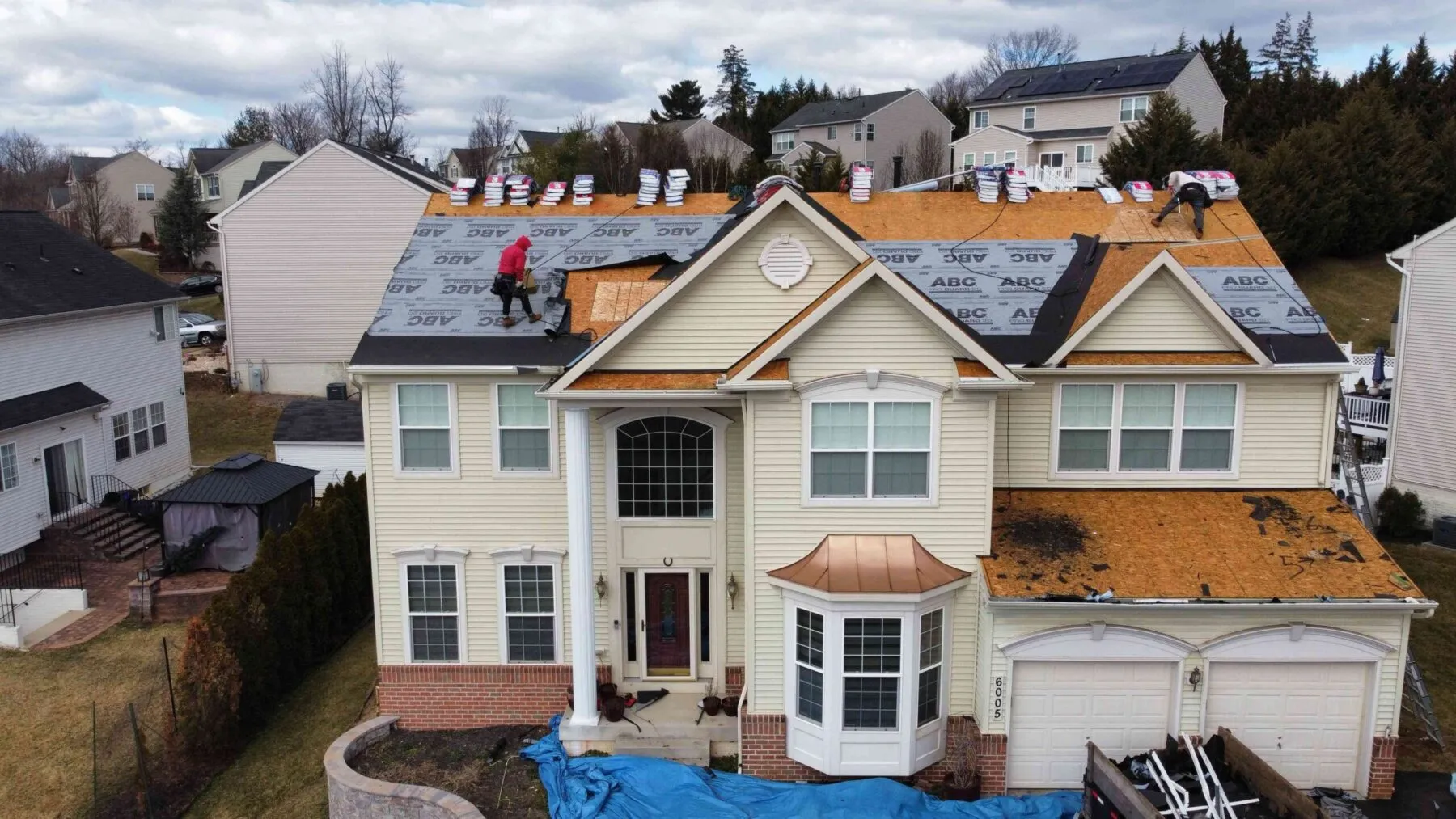
Urgent winter guide for Elkridge, MD homeowners to identify critical roof problems before they become expensive disasters.
As winter tightens its grip on Elkridge, MD, cold temperatures, snow, ice, and wind create conditions that can rapidly deteriorate the integrity of your roof. Your home’s roof is its first line of defense against the elements, but when problems go unnoticed or are ignored until spring, minor issues can turn into major catastrophes that cost thousands of dollars to repair.
In this comprehensive guide, we’ll walk you through five key signs of winter roof damage, explain why waiting until spring is a costly mistake, show how to safely inspect your roof from the ground, and outline what to do if you find damage, including when to contact DS Home Improvement for emergency winter roof services that protect your Elkridge home.
Why Winter Roof Damage in Elkridge, MD Is So Serious
Elkridge winters are defined by freezing temperatures, sleet, snowstorms, and repeat freeze-thaw cycles. Each of these conditions puts unique stress on roofing materials:
- Water expands when it freezes, forcing gaps wider.
- Snow and ice add weight that can warp structural support.
- Wind and temperature swings weaken shingles and underlayment.
These elements act together to accelerate roof wear, meaning a small issue in December can become a major leak by March if left unattended. This is why waiting until spring for repairs could cost exponentially more than acting immediately.
1. Ice Dams: Silent Threats That Trap Water Under Your Shingles
What Ice Dams Are
Ice dams form when heat from inside your home escapes into the attic and warms the roof surface enough to melt snow. That melted water runs down toward the cooler eaves until it refreezes. Over time, this repeated process builds thick ridges of ice along roof edges that trap more water behind them.
Why They Matter
Ice dams are dangerous because water that backs up behind these frozen barriers can be forced underneath your roof shingles and into the decking and attic. This leads to rot, mold growth, and active leaks in your ceilings and walls, even on days without precipitation.
Signs of Ice Dams to Watch For
- Long ridges of ice along the roof perimeter
- Icicles hanging in heavy clusters
- Water stains appearing on interior ceilings or walls
Homeowners often confuse icicles with a charming winter scene, but in reality, they can indicate a much deeper issue with ice dam formation when seen in large numbers.
Concerned about ice dams on your Elkridge home? DS Home Improvement offers free winter roof inspections to identify problems before they become emergencies. Call 1-888-896-1249 today.
2. Icicle Patterns That Reveal Ventilation and Insulation Issues
What Your Icicles May Be Telling You
Not all icicles are purely aesthetic. Their location and density can give clues about heat loss.
- Icicles over vents or near attic spaces often point to insufficient insulation or poor attic ventilation.
- When heat escapes unevenly from your attic, it can create pockets that melt snow in some areas but not others, resulting in unusual icicle formations.
The Link to Roof Damage
Improper attic insulation allows warm indoor air to reach the roof deck, which combines with cold outdoor air to form ice dams (as explained above). Meanwhile, inadequate ventilation means that heat and moisture are trapped inside your attic year-round, further reducing the lifespan of roofing materials and increasing the likelihood of rot and mold.
3. Interior Water Stains: Active Leaks That Spread With Freeze-Thaw Cycles
The Common Winter Leak Pattern
During winter, water tends to seep through even the smallest openings because ice dams and snowmelt exert pressure on your roof system. Often, the first visible sign of serious roof damage isn’t on the roof. It’s inside your home. That’s because moisture travels down insulation and through ceilings before finally showing up as discoloration or damp patches on drywall.
Where You’ll Usually See Them
- Along ceiling edges and corners
- Around interior light fixtures
- On walls beneath exterior doors or windows
Why Acting Promptly Matters
Once water infiltrates your living spaces, it won’t stop there. The freeze-thaw cycle makes leaks unpredictable: water enters during a warm spell, freezes again in cracks, expands, and pushes into new areas. This can rapidly turn small stains into widespread damage affecting ceilings, framing, and insulation, and creates a perfect environment for mold.
4. Sagging Roof Lines From Excessive Snow Weight
Recognizing a Sagging Roof
Your roof should appear straight and level when viewed from the ground. However, heavy snowfall combined with ice buildup can put tremendous weight on your roof’s structure, causing slight dips or curves in the roof line. These aren’t always obvious, but even a slight sag can signal compromised framing.
Why Sagging Happens
Snow and ice are heavy. A roof built for Elkridge’s seasonal conditions still has limits. When snow accumulates to several inches thick, it can overstress rafters or trusses, particularly if repeated snowfalls aren’t cleared.
The Danger of Ignoring Sagging
Sagging is a structural warning, and one that worsens over time. If the roof deck begins to bend, it can crack shingles, separate flashing, compromise interior ceilings, and eventually lead to collapse under extreme loads. These situations require immediate professional intervention.
5. Missing or Lifted Shingles From Winter Wind Damage
How Winter Weather Weakens Shingles
Cold temperatures make shingles less flexible and more brittle. Combine that brittleness with gusting winter winds, and shingles may crack or become dislodged entirely. Once shingles are lifted or missing, water can more easily infiltrate the underlayment and decking beneath.
What to Look For During Ground Inspections
- Pieces of shingle debris around your property
- Dark patches where granules have worn off
- Roof edges that appear uneven or rough
Why This Matters in Winter
Even small gaps can allow moisture in. When temperatures drop below freezing, that moisture turns to ice, widening seams and worsening damage with each passing freeze-thaw cycle.
Why You Should Never Wait Until Spring
Homeowners often delay roofing repairs in winter, thinking spring is just around the corner. But here’s why that’s a mistake:
1. Damage Accelerates During Winter
Freezing water trapped inside roofing systems expands and worsens cracks, lifts shingles, and degrades underlayment over time.
2. Interior Repairs Cost Much More
A minor roof leak in January that could have been fixed with a shingle replacement might turn into ceiling drywall replacement, insulation removal, or structural framing repairs by April.
3. Insurance Complications
Roof damage that develops into interior structural harm because of delayed reporting may complicate insurance claims or reduce payout amounts. Acting promptly strengthens your documentation and repair timeline.
Time is critical when it comes to winter roof damage. DS Home Improvement provides emergency roof repairs throughout Elkridge, MD, even in winter conditions. We handle insurance claims from start to finish, so you can focus on protecting your home. Call us now: 1-888-896-1249 or 443-936-8223.
How to Safely Inspect Your Roof From the Ground This Winter
Winter roof inspections don’t require climbing icy ladders. In fact, you shouldn’t attempt that in cold conditions. Here’s how to do a safe inspection from the ground:
1. Use Binoculars for Close-Up Views
Standing a safe distance from your home, scan the entire roof surface for lifted shingles, deterioration, or ice formations.
2. Look for Visible Interior Signs
Check attic spaces with a flashlight where possible for water stains or wet insulation.
3. Observe Eaves and Gutters
If gutters are sagging, filled with ice, or pulling away from the home, these are signs of water weight or underlying issues.
4. Photograph Any Suspected Damage
Documenting visible issues helps both repair professionals and insurance adjusters understand the problem before work begins.
These steps help you assess whether there’s a problem and whether it warrants immediate professional attention.
Emergency Winter Measures You Can Take
If you identify any of the warning signs above, here are actions you can take right away:
• Temporarily Clear Snow Safely
Use a roof rake from the ground to remove excess snow, particularly near roof edges where ice dams form.
• Apply Ice Melt Carefully
Ice melt products can be placed on roof edges (not directly on shingles) to help reduce ice dam formation.
• Use Buckets or Towels for Active Drips
While not a solution, containing drips with buckets or towels until professional help arrives prevents interior water damage.
• Check Attic Ventilation
Make sure attic vents are clear of snow and debris. Proper airflow reduces heat buildup and future ice dam formation.
These are temporary fixes. The real resolution comes from professional assessment and repair.
How Proper Insulation and Ventilation Prevent Winter Roof Problems
Why Attic Insulation Matters
Good insulation keeps warm indoor air from rising into the attic, which:
- limits snowmelt on your roof surface
- prevents ice dams from forming
- reduces energy costs
The Role of Ventilation
Even with excellent insulation, your attic still needs proper ventilation to allow heat and moisture to escape. When air can circulate freely, it:
- regulates attic temperatures
- prevents moisture buildup
- extends shingle and roof life
Improper insulation or ventilation often shows up first as unusual icicle formations or uneven snow melt patterns, which are early indicators of deeper roof system concerns.
When to Contact DS Home Improvement for Winter Roof Repairs
If you notice any of these signs (ice dams, interior stains, sagging roof lines, missing shingles, or unusual icicle formations), it’s time to reach out for expert help. DS Home Improvement is a trusted roofing and insurance restoration contractor serving Elkridge and the surrounding areas.
What DS Home Improvement Can Do for You
- Thorough winter roof inspection
- Emergency roof repairs
- Roof replacement & insurance restoration support
- GAF Certified roofing installation with quality materials and warranties
- We specialize in navigating the insurance claim process for storm or winter damage
Your roof protects your family and possessions. When winter issues strike, acting quickly can save you time, stress, and money down the road.
Conclusion: Don’t Let Winter Damage Wait Until Spring
Winter roof damage in Elkridge isn’t something any homeowner should ignore. From ice dams to missing shingles, each warning sign can be a precursor to serious structural problems if left unaddressed. By recognizing these issues early, conducting safe inspections, and contacting professionals like DS Home Improvement when necessary, you can protect your home, preserve your roof’s lifespan, and avoid costly repairs in the future. If you’re concerned about roof damage this winter, don’t wait. Act now. Contact DS Home Improvement at 1-888-896-1249 or 443-936-8223 for a free winter roof evaluation today!